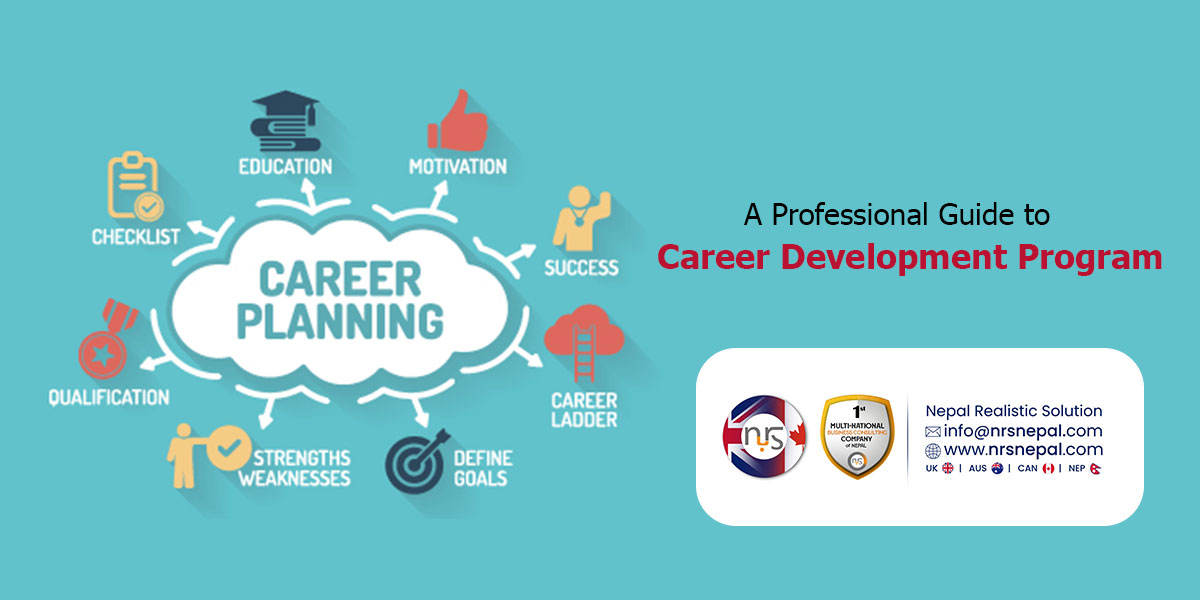
A career development program is a structured approach that helps employees grow their skills, improve performance, and build a clear path toward long-term success within an organization. At NRS, we understand that sustainable business growth is directly connected to how well employees are developed, trained, and supported throughout their careers.
In the competitive business environment, organizations cannot depend only on hiring external talent. Instead, they must invest in strengthening internal capabilities. That is why we focus on building systems that connect employee aspirations with organizational goals. Our ISO-based framework ensures that every development initiative is structured, measurable, and continuously improved. When employees are given clarity about their growth, they become more engaged, motivated, and productive in their roles.
Understanding Employee Needs and Growth Potential
We begin by understanding that every employee has unique strengths and career goals. A successful career development program must be personalized rather than generic, because people grow in different ways and at different speeds.
We conduct skill assessments, performance reviews, and one-on-one discussions to understand individual development needs. This helps us identify gaps between current abilities and future job requirements. Based on this analysis, we create clear and achievable development pathways.
Communication is a key part of this stage. Employees must understand not only what is expected of them but also how they can progress in their careers. Managers play an important role here by acting as mentors who guide, support, and encourage continuous improvement. This builds trust and creates a positive learning culture.
Designing a Structured Implementation Framework
To ensure effectiveness, a career development program must be built on a clear and structured framework. We define specific objectives such as leadership development, technical skill enhancement, and role readiness.
We design learning modules that combine formal training, mentoring, and practical job exposure. This blended approach ensures that employees not only learn concepts but also apply them in real work situations.
Digital learning platforms are also integrated to provide flexibility and accessibility. Employees can track their progress and learn at their own pace while staying aligned with organizational goals. Regular feedback sessions allow us to refine and improve the system. ISO standards guide us in maintaining consistency, documentation, and quality across all processes.
Practical Execution and Workplace Learning
Execution is where the real impact of a career development program becomes visible. We ensure that employees actively participate in workshops, on-the-job training, and skill-building exercises.
We strongly believe that learning becomes more effective when applied in real-world situations. That is why employees are encouraged to take on responsibilities that challenge their current capabilities.
Managers provide continuous guidance and constructive feedback to help employees improve. Regular performance evaluations help track progress and identify areas that need further development. Over time, employees become more confident, capable, and efficient in their roles, which directly contributes to organizational success.
Benefits for Employees and Organizations
A well-implemented career development program creates long-term value for both employees and organizations. For employees, it provides clarity about career progression and helps them build relevant skills for future roles. This increases job satisfaction and motivation.
For organizations like NRS, it strengthens internal talent pipelines and reduces dependency on external recruitment. It also improves employee retention because individuals feel supported and valued in their growth journey.
Additionally, it enhances workplace culture by promoting collaboration, learning, and continuous improvement. Employees become more productive, engaged, and aligned with organizational goals, leading to overall business success.
Role of ISO Standards in Development Systems
At NRS, ISO certification principles form the backbone of our career development program framework. These standards ensure that every process is structured, transparent, and continuously improving.
We use clear documentation, performance tracking, and regular audits to measure effectiveness and identify areas for improvement. This data-driven approach helps us refine training strategies and maintain high-quality outcomes.
By aligning with ISO standards, we ensure global best practices in employee development, making our systems reliable, scalable, and consistent across all levels of the organization.
Building Growth Through People
In conclusion, a career development program is not just a training initiative but a long-term investment in people and organizational success. At NRS, we focus on building structured, meaningful, and ISO-aligned development systems that support continuous growth.
When employees are given the right guidance, tools, and opportunities, they grow with confidence and purpose. In turn, organizations benefit from higher productivity, stronger talent retention, and long-term stability. Growth becomes a shared journey where both employees and organizations move forward together.