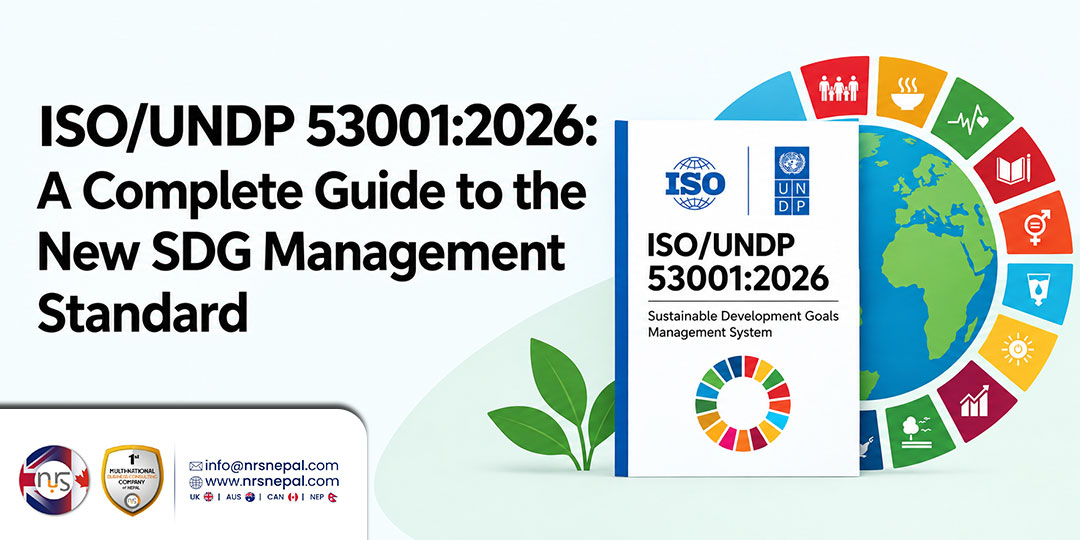
A New Step Toward Sustainable Business
Sustainability is no longer simply a statement of good intentions. Organizations are increasingly expected to show how their decisions, operations, and strategies contribute to a better social, economic, and environmental future. In September 2026, the International Organization for Standardization (ISO) and the United Nations Development Programme (UNDP) introduced a major development: the world’s first International Standard specifically designed to help organizations manage their contribution to the United Nations Sustainable Development Goals (SDGs). The standard provides a structured, requirements-based management system that can connect sustainability with everyday organizational activities. For businesses seeking a practical approach to sustainable development, ISO/UNDP 53001:2026 is therefore highly significant.
What Is ISO/UNDP 53001:2026?
ISO/UNDP 53001:2026, officially titled Management systems for United Nations Sustainable Development Goals (SDGs) - Requirements, establishes requirements for a management system intended to optimize an organization’s contribution to the SDGs. Unlike approaches that treat sustainability as a separate project, it encourages organizations to integrate sustainable development into their purpose, strategy, governance, operations, and decision-making. The standard is generic, meaning it is designed for organizations of different types and sizes, regardless of the products or services they provide. It also takes an integrated view of the 17 SDGs, helping organizations understand connections, synergies, trade-offs, and potential impacts. This makes it relevant across industries and sectors.
Why Does This Standard Matter?
Many organizations support the SDGs, but turning ambitious commitments into consistent action can be difficult. ISO/UNDP 53001:2026 addresses this challenge by offering a systematic framework for moving from intention to implementation. Organizations can identify and assess both beneficial and adverse impacts, engage relevant interested parties, establish meaningful objectives, gather information, measure performance, and evaluate results. The approach also encourages continual improvement through the familiar Plan-Do-Check-Act management cycle. In practical terms, this means sustainability can become part of normal management rather than remaining an occasional campaign or isolated department responsibility. For forward-looking organizations, it can support stronger accountability and more informed decisions.
Key Benefits for Organizations
The potential benefits extend beyond environmental responsibility. A well-managed SDG system can help organizations align sustainability priorities with business strategy, identify risks and opportunities earlier, and establish measurable objectives. It can also strengthen communication with customers, employees, investors, regulators, communities, and other interested parties. Another important advantage is its focus on relationships among the SDGs. For example, an initiative designed to improve energy efficiency may also influence climate action, operating costs, innovation, and resource use. Considering these connections can help organizations avoid narrow solutions and make more balanced decisions. By encouraging evidence-based evaluation and continual improvement, ISO/UNDP 53001:2026 can turn sustainable development into a more practical management discipline.
How Can Organizations Prepare?
Organizations interested in adopting this approach should begin by understanding their current sustainability position. This can include reviewing organizational objectives, existing policies, relevant stakeholders, impacts, risks, opportunities, available data, and current initiatives related to the SDGs. Next, leadership should determine which sustainability priorities are most relevant and how they can be incorporated into existing processes. Clear objectives, responsibilities, performance indicators, documentation, monitoring, and review mechanisms can then provide a foundation for continual improvement. Organizations do not necessarily need to start from zero; existing management systems and processes may provide useful building blocks. For businesses preparing for the future, ISO/UNDP 53001:2026 offers a structured direction.
ISO/UNDP 53001 and the Future of Sustainable Development
An important feature of the new standard is its long-term perspective. Although the current SDGs are associated with the 2030 Agenda, ISO and UNDP state that the standard is designed to remain relevant to subsequent global goals that may supersede the current agenda. This makes it more than a short-term sustainability checklist. It provides a management-system foundation that can evolve as global development priorities change. ISO/UNDP 53001:2026 is also different from a simple list of sustainability targets: it focuses on how an organization manages its contribution, measures progress, and continually improves. As sustainability expectations grow, this systematic approach could become increasingly valuable for organizations worldwide.
How NRS Can Help
For organizations in Nepal looking to understand emerging ISO standards and strengthen their management practices, professional guidance can make implementation clearer and more practical. NRS provides management consulting, ISO certification services, training, and business advisory support, with a focus on helping organizations improve their systems and performance. As ISO/UNDP 53001:2026 is a newly published standard, organizations should seek competent guidance to understand its requirements and determine how they apply to their specific context rather than treating SDG alignment as a marketing exercise. With the right approach, sustainability can become an integrated part of organizational growth, resilience, accountability, and long-term value creation. It represents an exciting opportunity to make that transition more systematic.